显示标签为“Internet of things”的博文。显示所有博文

2013年7月17日星期三

The new Internet of Things operating platform will be born

Micro message as a mobile application that requires mutual concern in order to release information to each other, is a closed-loop structure. Objectively speaking, Micro message as a communication tool, is not conducive to the widespread dissemination of information, the form of communication is one to one. After Micro message has a billion user base, facing one billion audience, it changes from a communication tool into a media platform.
 Image
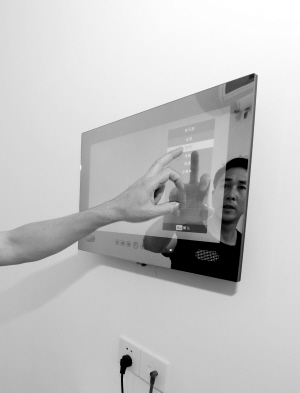
In future, micro message not only to realize the communication between people, the ultimate goal is to achieve the connection between people and objects, let each intelligent device has an ID, and the user can remotely operate the device by associating account. Micro message is a pioneer soldier to enter into Internet of Things, smart home has been able to achieve the installation of micro message server and realize remote management of home equipment through associated accounts, which is believed to enter the networking industry micro real evidence.

2013年7月16日星期二

The Internet of Things style, even Facebook "good" can be materialized

Facebook mobile is not cool, you know what’s cool? The Facebook page "good" counter moved to the merchants’ window of reality. Frankly speaking, there is nothing essentially contact between these two things, but from the French startup Smiirl product Fliike not only looks cool, but is like a bridge to the merchant's virtual identity and entities linked together.

Facebook mobile
Facebook mobile
Long term, Smiirl intends to use this concept for merchants to create a "reinventing virtual link between social and physical identity" ecosystem. Smiirl has its own funds and Le Camping nonprofit incubator support from France, although the company purely from equipment sales to profit, but Nadaud also hinted the company is building an ecosystem in the future to bring the company additional profits.
read more:  http://www.four-faith.com/En/Solutions/ 

2013年6月27日星期四

IOT props up a "protective umbrella" for city safety

The existence of security risks in the forest protection, road safety and drug safety supervision and other industries, targeted research to explore a range of information technology solutions, which not only effectively improve the safety index of all walks of life, but also, in certain extent, promote the local and the whole region's information construction process, and will promote the great development of social economy.
 Image
Safety is the key to early warning security incidents in a timely manner before the accident safety precautions, and Internet of things technology is a powerful tool to solve this problem, the application of the prophet, the projected precedent ability to enhance the whole administration orientation security capabilities, also protect the life and property safety.

2013年6月25日星期二

Internet of Things takes three steps, step by step to occupy the industry center

ARM is how to understand Internet of things development trend, ARM co-founder and CTO Mike Muller said in an interview, will Internet of Things develop in three steps. small data converging big data. 2, industrial scale need to be standardized. 3, shared data need you trust. Take a good three steps, Internet of things will achieve industrial-scale development.
The core of Internet of things is a personal application, facilitating and promoting health, collecting personal daily life data. Such as the weight instrument and smart phones connected up to record on the body mass index, when life is not very healthy, the phone will automatically alert.
Image
Application of embedded intelligent devices can help consumers find packing spaces in the busy city. Through data monitoring, collection and sharing, consumers can quickly understand what car parks nearby have vacant parking spaces; for parking operators, these collected information can be analyzed to help determine which areas are popular commercial district, so as to increase parking prices accordingly.

2013年6月20日星期四

Smart home combined with Internet of things into the daily life

"Internet of Things" and "cloud", "Sensing Technology" based on their security and smart home applications, so that the "Internet of things", this new word has not yet been accepted by the general public but gradually come into our field of vision. In addition to applications in security, smart home applications better reflect the power of technology and the "Internet of things" of this new concept brought life convenient.
Whenever you are using the remote control home appliances, after simple learning the code, you can control the mobile phone without installing any other device. For some appliances without using the remote control, if the user has a demand, also can be achieved through a simple transformation to realize the remote control function. If you use at home, as long as the terminal equipment and the main chip in the same LAN. If you want to use it outside, all instructions will be uploaded to the server, and then pass to online equipment.

Cloud computing and Internet of things will eliminate the traditional outsourcing industry

With cloud computing, Internet of things and other high-tech industries form the social business model, "reduce costs" for the purpose of the traditional outsourcing industry faces extinction, they will be replaced by a new type of service outsourcing industry model. The next 3-5 years, the global potential for related industries over $ 4 trillion. From doing "subtraction" to do "addition", which will be the main trend of global service outsourcing enterprises future development. Cloud computing, Internet of things and other technologies will enable service outsourcing enterprises change from "cost center" into a "business model developers", telling buyers how to create more profits.
Image

2013年6月12日星期三

Making Sense Of The Internet Of Things

The emerging Internet of Things — essentially, the world of physical devices connected to the network/Internet, from your Fitbit or Nest to industrial machines — is experiencing a burst of activity and creativity that is getting entrepreneurs, VCs and the press equally excited.
The space looks like a boisterous hodgepodge of smart hobbyists, new startups and large corporations that are eager to be a part of what could be a huge market, and all sorts of enabling products and technologies, some of which, including crowdfunding and 3D printing, are themselves far from established.
 Image
Image
(Click to enlarge)
The chart to the right is an attempt at making sense of this frenetic activity. From bottom to top, I see three broad areas – building blocks, verticals and horizontals:
Building Blocks
The concept of the Internet of Things is not new (the term itself was coined in 1999), but it is now in the process of becoming a reality thanks to the confluence of several key factors.
First, while still challenging, it is easier and cheaper than ever to produce hardware – some components are open sourced (e.g. Arduino microcontrollers); 3D printing helps with rapid prototyping; specialized providers like Dragon Innovation and PCH can handle key parts of the production process, and emerging marketplaces such as Grand St. help with distribution. Crowdfunding sites like Kickstarter or Indiegogo considerably de-risk the early phase of creating hardware by establishing market demand and providing financing.
Second, the world of wireless connectivity has dramatically evolved over the last few years. The mobile phone (or tablet), now a supercomputer in everyone’s hand, is becoming the universal remote control of the Internet of Things. Ubiquitous connectivity is becoming a reality (Wi-Fi, Bluetooth, 4G) and standards are starting to emerge (MQTT).  The slight irony of the “Internet of Things” moniker is that things are often connected via M2M (machine to machine) protocols rather than the Internet itself.
Third, the Internet of Things is able to leverage an entire infrastructure that has emerged in related areas. Cloud computing enables the creation of “dumb” (simpler, cheaper) devices, with all the intelligence processed in the cloud. Big data tools, often open sourced (Hadoop), enable the processing of massive amounts of data captured by the devices and will play a crucial role in the space.
Verticals
Unlike the Big Data space, where the action is gradually moving from core infrastructure to vertical applications, the Internet of Things space is seeing a lot of early action directly at the vertical application level. Some notable players like Nest Labs seem to have adopted a deeply integrated vertical strategy where they control key pieces of the product, including both hardware and software, in order to have complete control over the end-user experience (a lot like Apple, which is not surprising considering the founders’ background).
Beyond the Nest, home automation in general has become the central battlefield of the Internet of Things, with some of the most exciting startups in the space jockeying for position. Another hot consumer-facing area is obviously quantified self, which is playing a huge role in developing consumers’ awareness of the potential of the Internet of Things.
Beyond consumer, B2B/enterprise vertical applications of the Internet of Things, fueled in part by robotics, hold considerable promise in a number of areas such as manufacturing, transportation, healthcare, retail and energy. Some of clearest revenue opportunities for IoT startups are in the enterprise area.
Horizontals
While a lot of the action is happening at the vertical application level, the ultimate prize for many ambitious players in the space is to become the software platform upon which all vertical applications in the Internet of Things will be built. For example, several of the home automation providers (SmartThings, Ninja Blocks, etc.) also provide a software platform, and seem to be leveraging their vertical focus as a way to kickstart activity on the platform.
Large corporations (GE, IBM, etc.) are very active in the space and are developing their own platforms.  Carriers (AT&T, Verizon) have a large opportunity in the area, as well.
One open question is whether a platform developed for a vertical will easily translate to another vertical. In addition, whether the winning platforms are open or closed will play a huge role in the future of the space. My bet would be on openness.
The related area of connectivity (connecting objects to the network/Internet and to one another through all sorts of rules) is also a very significant opportunity.
The space is extraordinarily exciting, but still very much in its infancy – expect this chart to change dramatically over the next few months and years.

2013年6月8日星期六

Google wants to open the network Market by using Android

Android has occupied 75% of the mobile phone market, the foreign media has said that with the development of things, Android is becoming the standard operating system of “Internet of things”, jet engine monitors and shoes sensors have been equipped with the Android system.
Network devices are quite a lot, a simple sensor itself has automated system, Android system may be equipped on some high-end sensors, in the 4th-5th layer of the sensor, that can improve the computing power and speed up processing of information. Google is very accurate idea of the direction, the Internet of things now no longer confined to intelligent terminals, mobile intelligence, networking future market will be more wider, Google will load Android system into network devices, on their own and the networking industry's development will be mutually beneficial.
Image